
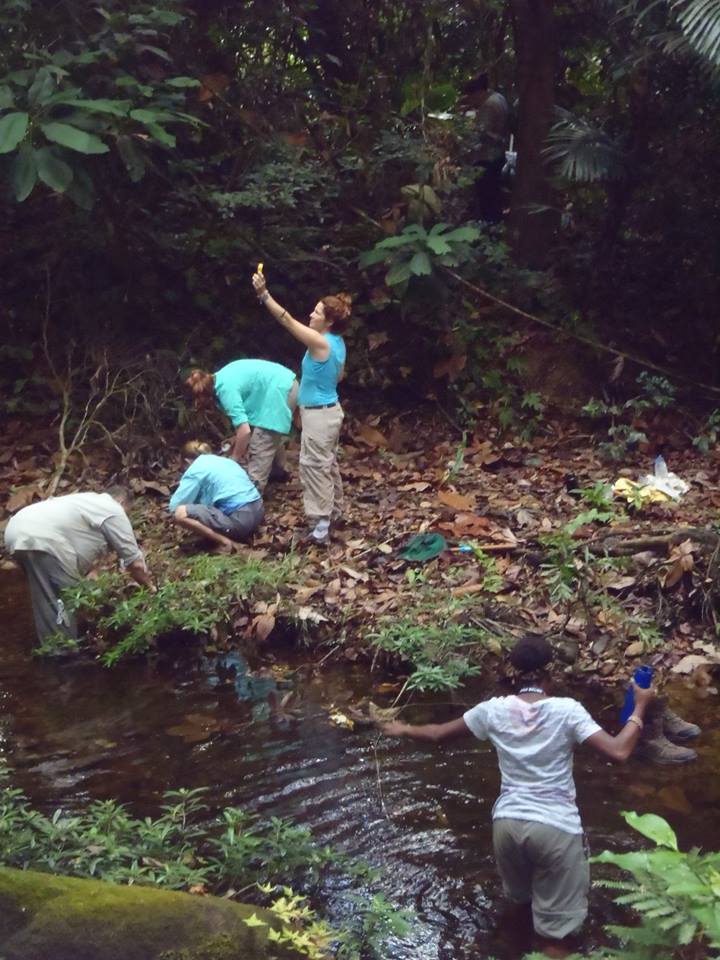
Collaborative Collection
Spider community data collection (2013) in the field at Cockscomb Basin Wildlife Sanctuary in Belize.
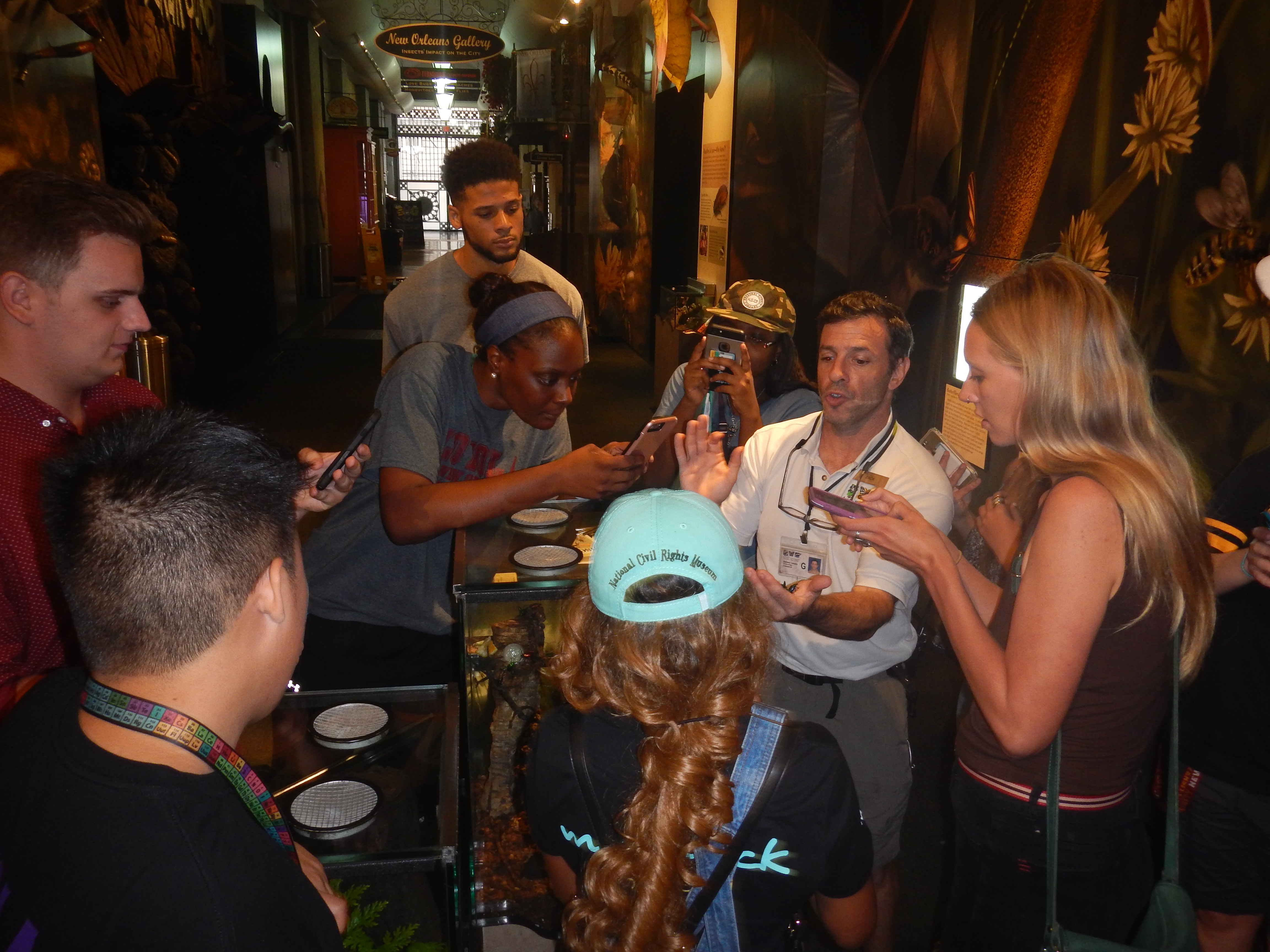
The City as a Classroom
An Entomology class trip (2017) to Audubon Insectarium in New Orleans.
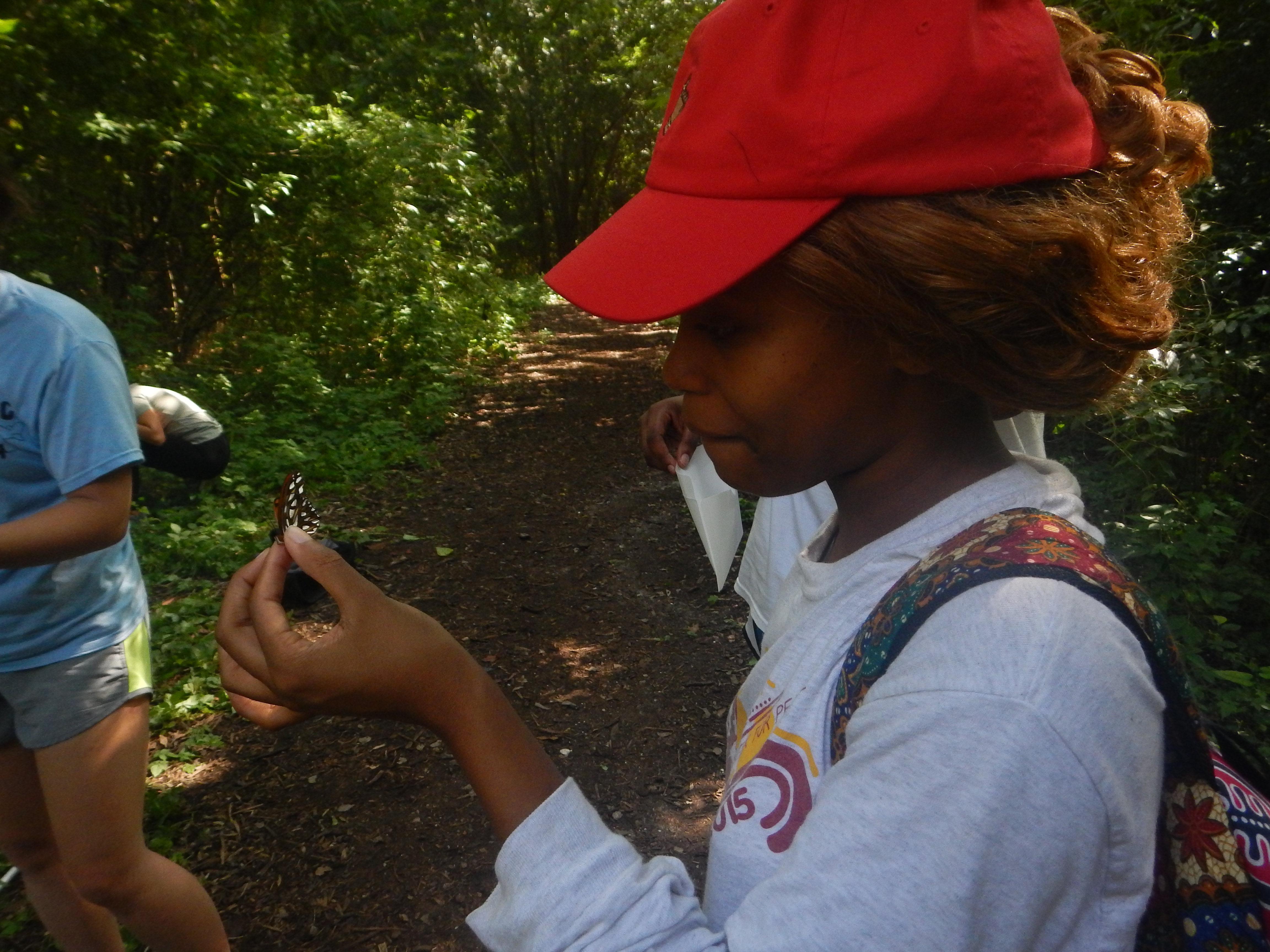
Close Up with Critters
A student (Alexis Thomas ENVB '18) holding and observing a butterfly during data collection for Entomology class in New Orleans City Park (2017).
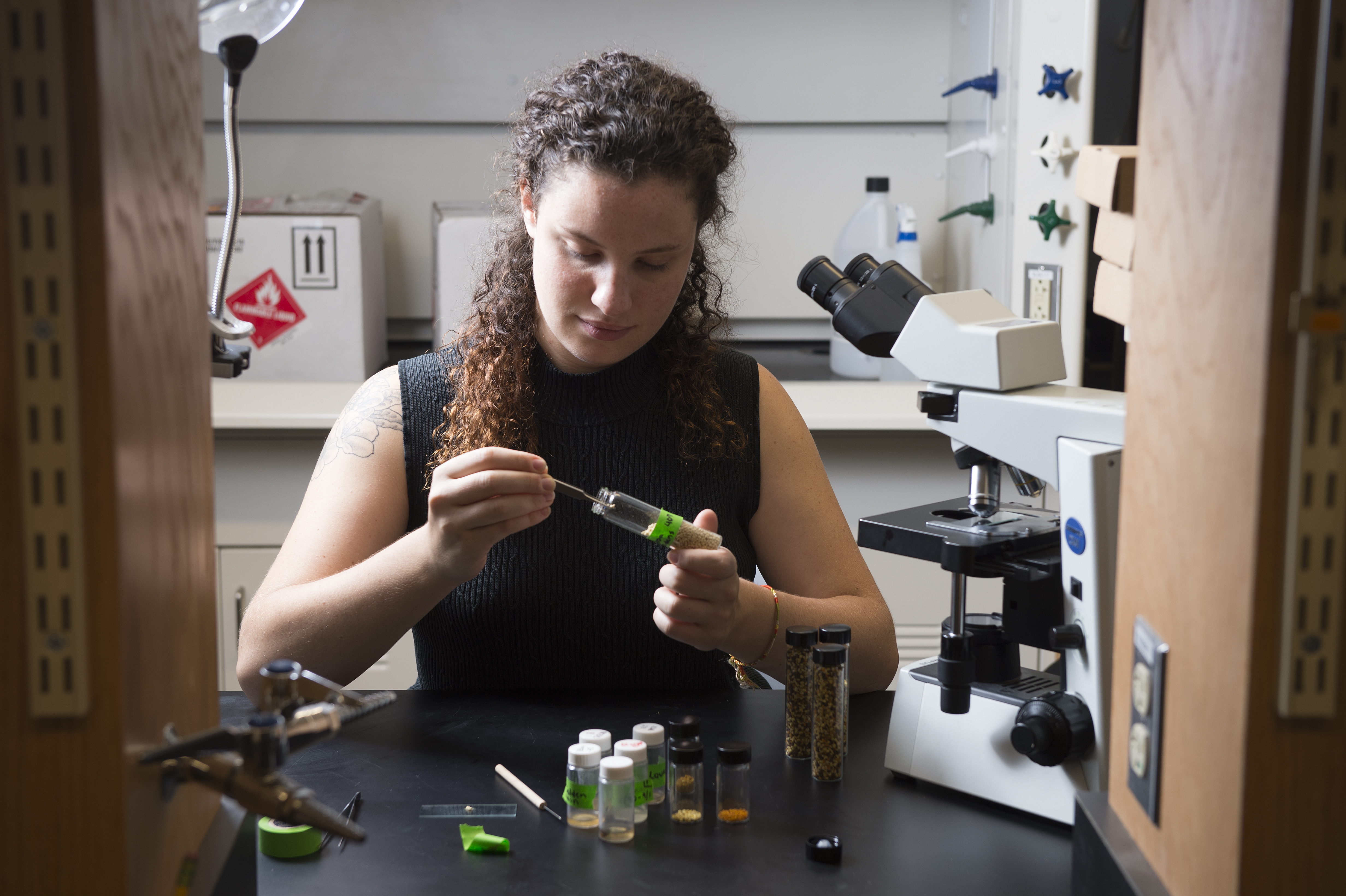
Access to Lab Resources
Melanie Sferrazza (ENVB '17) in the Thomas Lab observing bee pollen pellets as part of her senior capstone thesis project.
TEACHING PHILOSOPHY
To effectively engage students in the process of learning, I draw on 25+ years of teaching, research, and service across secondary and post-secondary education incorporating peer-reviewed data-driven experiential learning pedagogies that are transformative for students. My courses are inquiry-based and laden with active learning hands-on experiences. My effective teaching strategies include engaging students in every step of the process of science. As an educator, I see my role as the facilitator of learning and not as the ultimate source of knowledge. I also recognize that there are diverse learning styles so I incorporate many strategies to accommodate the different types of learners. I use graphical representation to illustrate difficult concepts and check for student understanding (formative assessment) throughout class. For example, at the beginning of a class, I might ask application questions about the information already covered to make sure students are able to transfer and apply the knowledge obtained in previous classes and make connections to current content. This might include showing a short video clip and allowing the student 5 minutes to write about the biological phenomenon or starting the class with a peer review of the work due. This approach tends to create enthusiasm and self-awareness about a topic and certainly engages the students in the learning process. I believe that involving the students in the process is paramount and that is what I strive for in every class.
I believe that people both want and expect to be challenged, which is why I have high expectations of my students, as anything less would be a disservice to their education. The responsibility of an educator is not only to deliver the information but also to ensure that students retain that knowledge and understand how it relates to the bigger picture. If I can relate the biological information in a manner that piques my students’ curiosity and helps them to develop critical thinking skills and acquire life-long learning skills, then I have accomplished my goals. I hope to make learning challenging, interesting, and something students will want to continue beyond their college careers. When students complete my courses, I hope they have developed the necessary skills to critically think, analyze, and effectively communicate biological phenomena. Ultimately, I want to provide a foundation on which to build a biological career.
Awards and Honors for teaching:
Loyola University New Orleans College of Arts & Sciences Teaching Award 2019
Loyola University New Orleans Senate Teaching Award 2016
Loyola University New Orleans Carter Fellow 2016
National Academies Education Fellow in the Life Sciences 2015 – 2016
Loyola University New Orleans Bobet Fellow 2015
Southern Miss Beta Beta Beta Teacher of the Year 2009
Southern Miss College of Science & Technology Outstanding Faculty Teaching Award 2008
Southern Miss Quality Enhancement Plan Teaching Fellow in Oral and Written Communication 2008
Southern Miss Biological Sciences Outstanding Faculty Teaching Award 2007, 2008
Classes Taught:
- Environmental Resilience and Sustainability
- Environmental Justice and Equity
- Foundations in Environmental Science
- Entomology/Lab
- Evolution
- Naturally N’awlins
- Tropical Ecology (Belize, Ecuador, Galápagos Islands, and Pantanal, Brazil)
- BioInquiry
- Biology of Organisms Lab
- Investigating Nature
Institutions Taught:
- Loyola University New Orleans (New Orleans, Louisiana) 2011 - current
- University of Southern Mississippi (Hattiesburg, Mississippi) 2001 - 2012
- Pearl Junior High School (Pearl, Mississippi) 1996 - 1998